Fire-resistant glass
Fireproof glass/Fire Rated Glass/Fireproof Glass is mainly used to control the spread of fire or prevent smoke. It is a measure-type fireproof material, and its fireproof effect is evaluated by fire resistance. It is a special glass that has been processed and treated by a special process and can maintain its integrity and thermal insulation in the prescribed fire resistance test. Fireproof glass can be made of float glass, tempered glass, and composite fireproof glass can also be made of a single piece of fireproof glass.
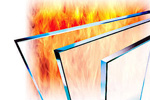
There are mainly eight kinds of fireproof glass:
1. high-strength cesium potassium monolithic fireproof glass
2. high compression stress monolithic fireproof glass
3. wired fireproof glass
4. laminated fireproof glass(finished products can be cut, edged, and drilled)
5. insulated fireproof glass
6. normal composite fireproof glass
7. nano silicon composite fireproof glass
8. high borosilicate monolithic fireproof glass


By product types:
Fireproof glass is a kind of special glass that can maintain its integrity in the specified fire resistance test. It is divided into two categories according to the product types:
Class A
At the same time, fire-resistant glass meets the requirements of fire-resistant integrity and fire-resistant heat insulation. Including two kinds of composite fireproof glass and poured fireproof glass. This kind of glass has the properties of light transmission, fire prevention (smoke insulation, fire insulation, heat radiation shielding), sound insulation, and impact resistance, and is suitable for building decorative steel-wood fire doors, windows, lighting, partition walls, lighting roofs, and smoke-blocking drapes. Walls, see-through floors, and other building components require both transparency and fire resistance.
Class C
The monolithic fire-resistant glass only meets fire-integrity requirements. This kind of glass has the characteristics of light transmission, fire resistance, smoke resistance, and high strength. It is suitable for fireproof glass partition walls, fireproof windows, outdoor curtain walls, etc. without thermal insulation requirements.
By structure types:
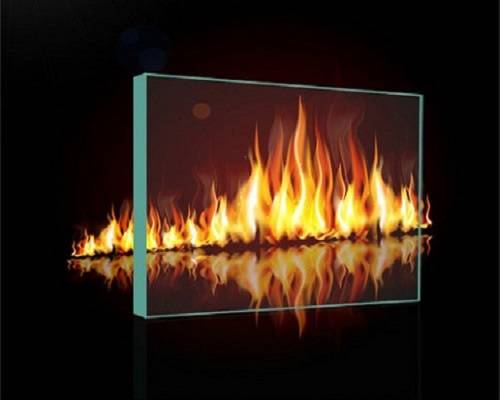
It is divided into fire-resistant laminated glass, thin-coated fire-resistant glass, single-piece fire-resistant glass, and fire-resistant wired glass. Among them, fireproof laminated glass can be divided into composite fireproof glass and perfusion fireproof glass according to the production process characteristics.
According to fire-resistance time rating:
It is divided into 5 grades: 0.5h, 1.00h, 1.50h, 2.00h, 3.00h.
According to fire resistance:
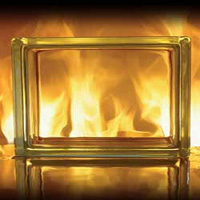
Heat-insulating fire-proof glass (Class A), Non-heat-insulating fire-proof glass (Class C).
By structures:
Fireproof glass is divided into a composite fireproof glass (perfusion type and composite type, grouting fireproof glass has good thermal insulation performance, and composite fireproof glass has good fireproof performance) and single-piece fireproof glass.
Compound:
It is composed of two or more layers of glass raw sheets with one or more layers of water-soluble inorganic fireproof glue interlayers.
Fire prevention principle: When a fire occurs, the fire-facing glass will burst soon after encountering high temperature, and its fireproof glue interlayer will foam and expand about ten times successively, forming a hard milky white foam fireproof glue board, which can effectively block the flame and isolate high temperature and harmful effects. gas. The finished product can be cut, edged, and drilled.
When it is suitable for external windows and external curtain walls, the design scheme should consider the combination of fireproof glass and PVB laminated glass. Scope of application: Fireproof doors and windows, fireproof partitions, and important parts of fireproof partition walls in building rooms, corridors, and passages.
Monolithic:
Single-piece fire-resistant glass is a fire-resistant glass with a single-layer glass structure. Maintain the integrity of fire resistance for a certain period of time, block open flames and toxic and harmful gases on the fire surface, but do not have the effect of thermal insulation.
It is suitable for exterior curtain walls, exterior windows, skylights, smoke-blocking vertical walls, fire-resistant glass frameless doors, and partition walls without thermal insulation requirements.
Perfusion type:
It consists of two layers of float glass raw sheets (or three layers of float glass raw sheets for special needs) and is sealed with special flame-retardant adhesive strips around it. The fireproof glue poured in the middle is solidified into a transparent jelly and bonded to the glass.
Fire prevention principle: After encountering high temperatures, the transparent jelly-like fireproof adhesive layer in the middle of the glass will harden rapidly to form an opaque fireproof insulation board. While preventing the spread of the flame, it also prevents the conduction of high temperature to the back fireside. This kind of fireproof glass not only has fireproof and thermal insulation properties but also has excellent sound insulation effects. Can be processed into an arc.
It is suitable for fire doors and windows, building patios, atriums, shared spaces, and computer room fire partition walls.
High borosilicate fireproof glass is the newest and most stable fireproof glass, it’s decided by the borosilicate glass characters.
High borosilicate fire-resistant glass contains high borosilicate, boron accounts for 12.5-13.5%, and silicon content is 78-80%. This results in high borosilicate fire-resistant glass with superacid and alkali resistance and can adapt to a temperature difference of 520℃. It can be kept at 750℃ for a long time without any change, and the softening point can reach above 850℃.

• The advantage of high borosilicate fire-resistant glass
☑ Excellent fire resistance
The ultra-high softening point provides a fundamental guarantee for the fire performance stably, and the fire resistance time exceeds 120 minutes. With ultra-high transparency, while maintaining the transparency and beauty of the building, it can still ensure people’s vision in the event of a fire to facilitate escape and rescue.
☑ High-strength and ultra-light performance
The weight is more than 8% lighter than ordinary glass, and at the same time, it has ultra-high mechanical strength. The extremely strong and light characteristics significantly reduce the weight of the building.
☑ Excellent optical performance
Low iron, environmentally friendly formula, high light transmittance, the visible light transmittance of 92%, and excellent optical quality provide distortion-free visual effects.
☑ Super high chemical stability
Acid resistance, alkali resistance, UV resistance, and good fire resistance.
☑ No risk of self-destruction
Self-explosion is currently a major hidden danger that is extremely difficult to overcome for building safety glass. Because the raw materials and systems of high borosilicate fire-resistant glass do not contain nickel, there is no nickel sulfide crystal in all glass products, which eliminates the hidden danger of self-explosion.
☑ Processability
The high borosilicate glass can be processed by cutting, edging, perforating, and coating before tempering. High borosilicate glass can be combined with other glass to be made into a building energy-saving fire-proof material with better comprehensive performance through the processes of laminating, hollowing, and vacuum.
☑ Double security
Fully toughened monolithic high borosilicate fireproof glass, meeting the requirements of fireproof and safety performance.
High borosilicate fireproof glass now has widely been used in public buildings, industrial and residential buildings, commercial buildings, residential communities, and other areas that require high fireproof performance.